Dairy Queen Allergen Menu: How to Find Safe Options
Dairy Queen publishes official allergen and nutrition information for its full menu, including breakfast, food, treats, and ice cream cakes, broken out by category on its website with downloadable PDFs for each section. Because DQ’s menu spans everything from soft serve to fried food and baked cakes, allergen risk looks very different depending on what you’re ordering, so this guide explains how to read DQ’s allergen menu, where the biggest cross-contact risks are, and what to check before you order.
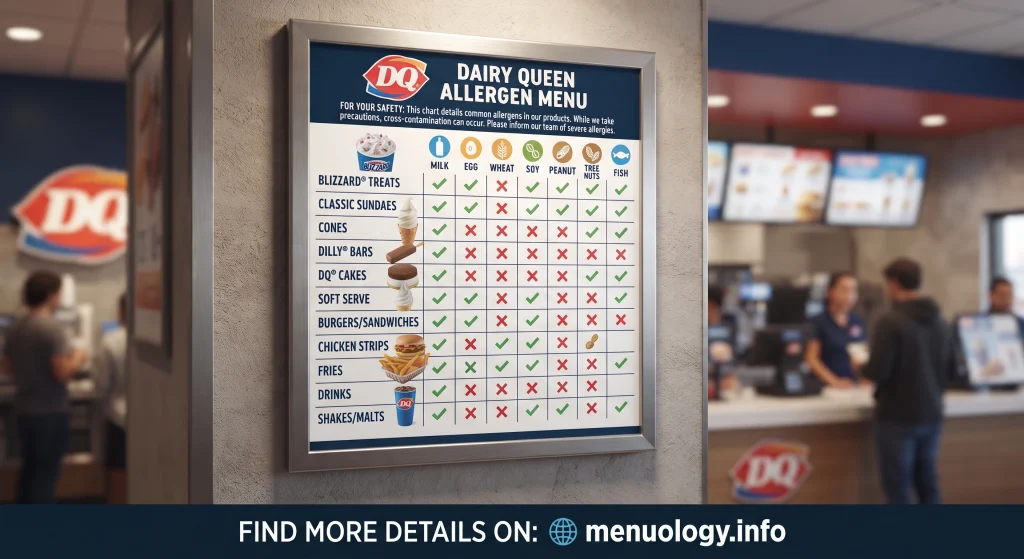
Last verified: [Month, Year]. Allergen categories referenced here follow Dairy Queen’s own allergen legend and published nutrition PDFs. Dairy Queen updates this information periodically, and exact ingredients can vary by location and market, so always check the current PDF or ask staff directly before ordering if you have a food allergy.
Where to Find Dairy Queen’s Official Allergen Menu
Dairy Queen’s allergen information lives on its official nutrition pages, organized by menu section, including a dedicated breakfast PDF, a core food and treats PDF, and separate documentation for ice cream cakes. Each item is marked with a letter-coded allergen legend covering the major allergens: egg (E), milk (M), soy (S), wheat (W), tree nuts, and peanuts, among others. This is the most reliable source for allergen decisions, since it’s the same document DQ’s own locations use, and it’s updated more frequently than most third-party menu summaries, including this one.
How Dairy Queen’s Allergen Legend Works
Rather than listing full ingredient statements on the menu board, Dairy Queen uses a letter-code system on its nutrition PDFs to flag common allergens present in each item. For example, a breakfast biscuit sandwich might be marked “E\M\S\W,” indicating it contains egg, milk, soy, and wheat. This system makes it possible to scan a full category quickly, but it only reflects allergens in the recipe itself, not the risk of cross-contact during preparation, which is a separate and often bigger concern at a shared kitchen like DQ’s.
Common Allergens by Menu Category
Breakfast: Most biscuit sandwiches contain egg, milk, soy, and wheat due to the biscuit, egg, and cheese components. Standalone items like plain bacon are less likely to carry major allergens, but shared cooking surfaces mean cross-contact is still possible.
Fries and Fried Sides: DQ fries are cooked in fryers that are also used for breaded items containing dairy and wheat, such as chicken tenders. Because of this shared fryer setup, fries aren’t considered reliably dairy-free or gluten-free even though the potatoes themselves don’t contain those ingredients.
Soft Serve and Blizzards: All DQ soft serve contains milk, making dairy the most unavoidable allergen across the treat menu. Blizzard mix-ins add their own allergens on top of that, cookie pieces and brownie bits typically add wheat and soy, while candy pieces can introduce tree nuts or peanuts depending on the flavor.
Ice Cream Cakes: Cakes combine ice cream, cake layers, and decorative toppings, which means they can carry a wider mix of allergens than a standard treat, including egg, wheat, soy, and depending on the specific cake design, tree nuts. Because cake designs vary and change seasonally, checking the specific cake’s listing rather than assuming based on a similar past order is especially important here.
Salads and Non-Dairy Options: For dairy-free or lower-allergen choices, items like a garden salad or fruit-based Misty Slush flavors are generally safer starting points than fried or soft-serve items, though dressing choices and shared prep surfaces still matter.
Cross-Contamination: The Part the Allergen Chart Doesn’t Show
Dairy Queen’s own allergen statement is direct about this: locations cannot guarantee any item to be entirely allergen-free, because ingredients are prepared in a shared kitchen with shared equipment. This matters most for two groups: people with severe or life-threatening allergies, where trace cross-contact can be dangerous, and people avoiding dairy or gluten for reasons beyond simple preference. The allergen legend tells you what’s in the recipe; it doesn’t fully account for what else that fryer, mixer spindle, or prep surface touched earlier in the shift.
How to Order Safely at Dairy Queen
- Check the official allergen PDF for your specific item before you order, not just the general category
- Tell the person taking your order about your allergy so they can flag any special handling needed
- Ask specifically about shared fryers and shared Blizzard mixing spindles if your allergy involves dairy, wheat, or nuts
- For severe allergies, treat any answer short of “this is prepared in a dedicated allergen-free area” as a real risk, since DQ does not operate allergen-free kitchens
Frequently Asked Questions
Does Dairy Queen have an allergen menu?
Yes. Dairy Queen publishes allergen information for its full menu, including breakfast, core food items, treats, and ice cream cakes, available as PDFs on its official nutrition pages.
Is there a Dairy Queen allergen menu PDF?
Yes, Dairy Queen breaks its allergen and nutrition information into separate PDFs by category, including a dedicated breakfast allergen PDF, on its official website.
Are Dairy Queen fries allergen-free?
No. DQ fries are cooked in shared fryers also used for breaded, dairy-containing items, so they aren’t considered reliably free of dairy or gluten despite the potatoes themselves being simple ingredients.
Do Dairy Queen ice cream cakes contain nut allergens?
It depends on the specific cake design, since decorations and mix-ins vary. Always check the allergen listing for the exact cake you’re ordering rather than assuming based on a similar item.
Can Dairy Queen guarantee any item is allergen-free?
No. Dairy Queen’s own allergen statement notes that its restaurants cannot guarantee any item is free of allergens due to shared kitchen equipment and preparation areas.
Confirm Before You Order
Allergen information can change and varies by specific item and location, so check Dairy Queen’s current official allergen PDF or ask staff directly before ordering, especially if you have a severe or life-threatening allergy.
Editorial note: This guide summarizes publicly available allergen information for general awareness and is not medical advice. If you have a severe food allergy, consult your doctor or allergist about safe dining practices, and treat any restaurant with shared kitchen equipment, including Dairy Queen, as carrying real cross-contact risk regardless of what a specific item’s recipe lists.