Best Canned Tuna: Types, What to Look For, and How to Choose
Finding the best canned tuna depends on more than choosing a popular brand. The type of tuna, texture, packing liquid, ingredients, sodium, and mercury levels can all make a difference.
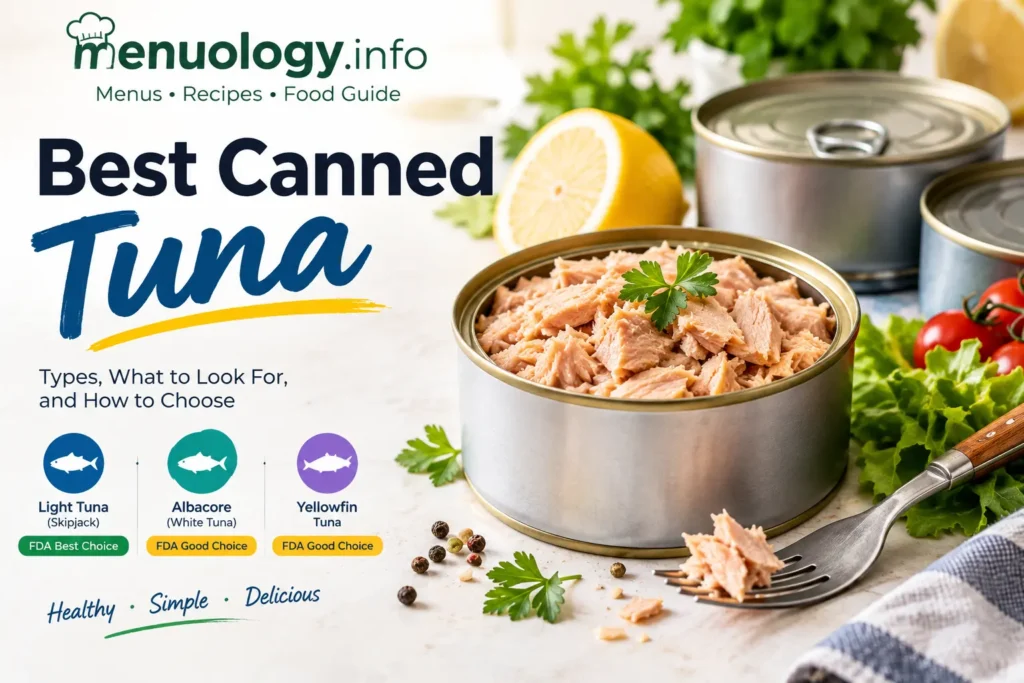
For everyday use, canned light tuna—often made primarily from skipjack—is an important option to consider. The FDA classifies canned light tuna as a “Best Choice” for lower-mercury fish, while canned albacore or white tuna is classified as a “Good Choice.”
What Is the Best Canned Tuna?
For people who want a versatile canned tuna for sandwiches, salads, pasta, and quick meals, canned light tuna is a practical choice. It generally has a softer, more familiar tuna flavor and is widely available.
If you prefer a firmer texture and richer flavor, albacore or white tuna may be more appealing. However, it generally contains more mercury than canned light tuna. FDA data lists average mercury levels of about 0.13 ppm for canned light tuna compared with about 0.35 ppm for canned albacore.
Canned Light Tuna vs. Albacore Tuna
| Feature | Canned Light Tuna | Albacore Tuna |
|---|---|---|
| Common species | Often skipjack | Albacore |
| Texture | Softer | Firmer |
| Flavor | Mild | Richer |
| Mercury level | Generally lower | Generally higher |
| FDA category | Best Choice | Good Choice |
| Best for | Everyday meals | Sandwiches and salads |
The FDA notes that canned light tuna can include skipjack, while albacore is a larger, longer-lived tuna.
Best Canned Tuna for Everyday Meals
Canned light tuna is a strong everyday option because it works well in many recipes without an especially strong flavor.
You can use it for:
- Tuna sandwiches
- Tuna salad
- Pasta
- Wraps
- Rice bowls
- Tuna melts
- Salads
- Quick snacks
Its versatility makes it particularly useful for keeping in the pantry.
Best Canned Tuna for Flavor
If flavor and texture are your main priorities, albacore tuna is worth considering. It typically has larger, firmer pieces and a richer taste than light tuna.
The trade-off is that albacore generally contains more mercury. For that reason, the FDA places canned albacore in its “Good Choices” category rather than “Best Choices.”
Tuna in Water vs. Tuna in Oil
Another important decision is whether to buy tuna packed in water or oil.
Tuna Packed in Water
Tuna in water is a popular option when you want a lighter product. It works particularly well in:
- Salads
- Sandwiches
- Wraps
- Meal-prep recipes
Tuna Packed in Oil
Oil-packed tuna can have a richer flavor and softer mouthfeel. It can work especially well in pasta, Mediterranean-style salads, and recipes where additional richness is desirable.
When choosing between them, check the nutrition label rather than assuming one option is always better.
What to Look for When Buying Canned Tuna
1. Check the Tuna Species
Look for terms such as light tuna, skipjack, albacore, or white tuna on the label. The species can affect both flavor and mercury exposure.
2. Check the Ingredients
A simple ingredient list can make it easier to understand exactly what you’re buying. Depending on the product, the ingredients may simply be tuna, water or oil, and salt.
3. Compare Sodium
Some canned tuna products contain considerably more sodium than others. If sodium intake is important to you, compare nutrition labels and look for lower-sodium options.
4. Choose the Packing Liquid You Prefer
Water-packed tuna is useful for lighter meals, while oil-packed tuna can provide a richer texture and flavor.
5. Consider Sustainability Information
Some brands provide information about how and where their tuna was caught. If sustainable seafood is important to you, check the package for relevant sourcing or certification information.
Is Canned Tuna Healthy?
Canned tuna can be a convenient source of protein and other nutrients. However, tuna is also one of the seafoods where mercury levels vary considerably by species.
The FDA recommends canned light tuna as a lower-mercury Best Choice and recommends eating a variety of fish rather than relying on one type exclusively.
How Much Canned Tuna Can You Eat?
The appropriate amount depends on the type of tuna and the individual. For its fish-consumption guidance, the FDA says canned light tuna can be eaten 2–3 servings per week, while its guidance for albacore is more limited because of its higher mercury level.
People who are pregnant, breastfeeding, or feeding young children should pay particular attention to FDA/EPA fish-consumption guidance.
Best Canned Tuna for Tuna Salad
For a classic tuna salad, canned light tuna or albacore tuna can both work well.
Choose light tuna if you prefer:
- A milder flavor
- Softer texture
- Lower mercury exposure
Choose albacore if you prefer:
- Larger pieces
- Firmer texture
- Richer flavor
Mix either with mayonnaise or Greek yogurt, celery, onion, black pepper, and your preferred seasonings.
Best Canned Tuna for Sandwiches
Albacore can be a good option for sandwiches because its firmer texture holds together well when mixed with mayonnaise, vegetables, or seasonings.
Canned light tuna is also an excellent everyday choice when you prefer a milder tuna flavor.
Final Thoughts
The best canned tuna depends on what you’re looking for. For an everyday, lower-mercury option, canned light tuna, including skipjack, is an especially useful choice according to FDA guidance. For a firmer texture and richer flavor, albacore tuna offers a different eating experience but falls into the FDA’s “Good Choices” category because of its higher mercury levels.
When buying canned tuna, look beyond the brand name and check the tuna species, ingredients, sodium, packing liquid, and sourcing information to find the option that fits your needs.