How to Use a Slow Cooker: Step-by-Step Guide
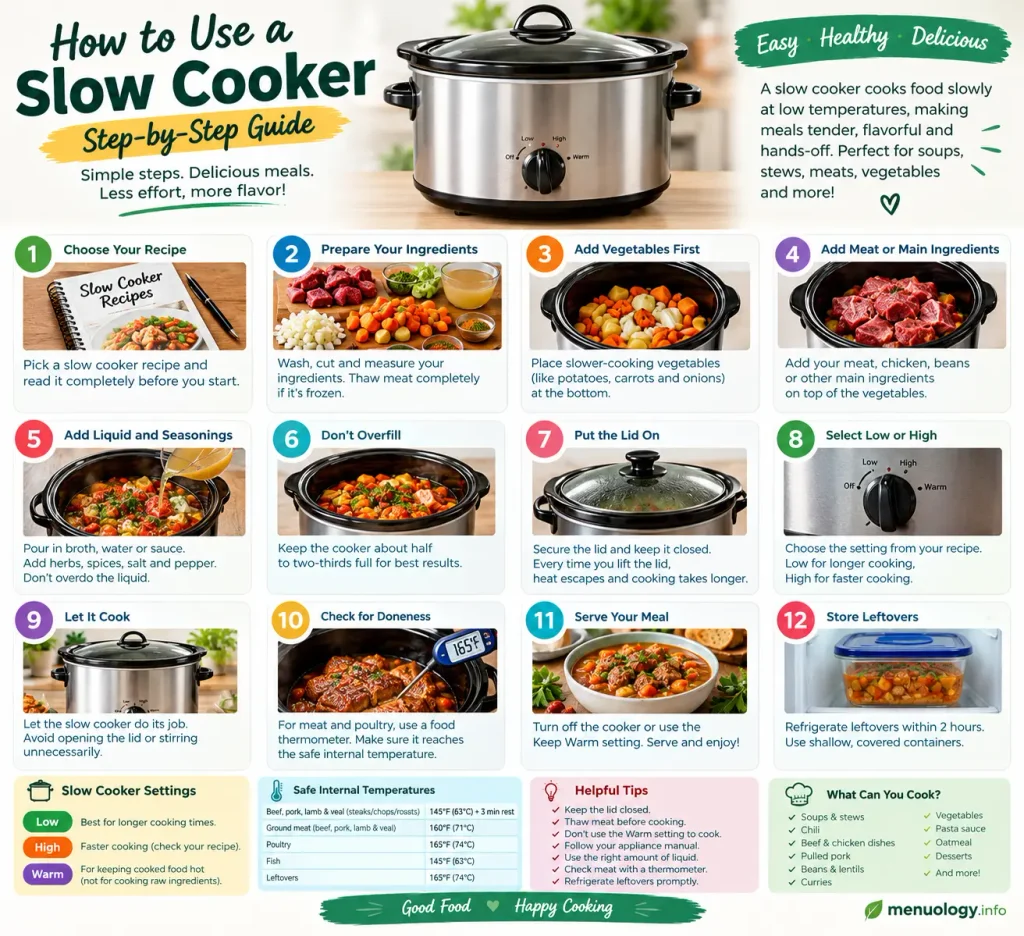
A slow cooker is one of the easiest kitchen appliances to use. Add your ingredients, choose the appropriate cooking setting, and let the cooker slowly transform them into a flavorful meal. From soups and stews to chicken, beef, beans, and even desserts, a slow cooker can handle a wide variety of dishes.
If you’re using one for the first time, this step-by-step guide on how to use a slow cooker will help you get started safely and confidently.
What Is a Slow Cooker?
A slow cooker is an electric countertop appliance designed to cook food gradually at relatively low temperatures. The combination of steady heat, moisture, and a covered cooking chamber helps tenderize foods over several hours.
Most slow cookers have settings such as:
- Low – for longer cooking
- High – for faster cooking
- Warm – for holding already-cooked food hot, not for cooking raw ingredients
How to Use a Slow Cooker Step by Step
Step 1: Choose Your Recipe
Start with a recipe designed for a slow cooker. Soups, stews, chili, pulled meats, beans, and dishes with plenty of moisture generally work well.
Read the complete recipe before starting so you know the required cooking time and ingredients.
Step 2: Prepare Your Ingredients
Wash and cut your vegetables, measure your seasonings, and prepare your meat.
If you’re using frozen meat or poultry, thaw it completely before putting it into the slow cooker. USDA guidance recommends thawing meat and poultry first because frozen pieces can take too long to reach a safe temperature.
Step 3: Add Vegetables First
Place slower-cooking vegetables such as potatoes, carrots, and onions toward the bottom of the cooker.
Vegetables generally cook more slowly than meat and poultry, so putting them underneath can help them cook properly.
Step 4: Add Meat or Other Main Ingredients
Place your chicken, beef, pork, beans, or other main ingredients on top of the vegetables.
For meat dishes, use the size and quantity recommended by your slow cooker’s manufacturer and recipe.
Step 5: Add Liquid and Seasonings
Add the required broth, water, sauce, tomatoes, or other liquid according to your recipe.
Don’t automatically fill the cooker with extra liquid. Follow the recipe because ingredients release moisture during slow cooking.
Add your herbs, spices, salt, pepper, and other seasonings.
Step 6: Don’t Overfill the Cooker
As a general guide, a slow cooker should be approximately half to two-thirds full. An overfilled cooker may not cook food properly, while an underfilled cooker can affect cooking quality.
Step 7: Put the Lid On
Secure the lid and keep it closed during cooking as much as possible.
Every time you remove the lid, heat escapes and the cooking process can take longer. USDA guidance specifically recommends keeping the lid in place while the food cooks.
Step 8: Select Low or High
Choose the setting specified by your recipe.
Low: Best for longer cooking times and many all-day meals.
High: Useful when you have less time and the recipe specifically allows it.
The exact cooking time depends on your recipe, ingredients, quantity, and individual appliance.
Step 9: Let the Food Cook
Once the slow cooker is running, allow it to do its job.
Avoid repeatedly opening the lid, stirring unnecessarily, or changing settings unless the recipe instructs you to do so.
Step 10: Check That Meat Is Safely Cooked
For dishes containing meat or poultry, use a food thermometer to verify doneness.
USDA minimum internal temperatures include:
| Food | Minimum Temperature |
|---|---|
| Beef, pork, lamb & veal steaks/chops/roasts | 145°F (63°C) + 3-minute rest |
| Ground beef, pork, lamb & veal | 160°F (71°C) |
| Poultry | 165°F (74°C) |
| Fish | 145°F (63°C) |
| Leftovers | 165°F (74°C) |
Step 11: Serve Your Meal
Once the food is fully cooked, turn off the cooker or use the appropriate Keep Warm function if your appliance has one.
The warm setting is intended for keeping already-cooked food hot rather than cooking raw food.
Step 12: Store Leftovers Properly
Don’t leave leftovers sitting at room temperature for an extended period.
Transfer leftovers into shallow, covered containers and refrigerate them promptly. USDA recommends refrigerating cooked leftovers within two hours.
What Can You Cook in a Slow Cooker?
Slow cookers are especially useful for:
- Beef stew
- Chicken dishes
- Pulled pork
- Chili
- Soups
- Beans
- Lentils
- Curries
- Vegetable stews
- Spaghetti sauce
- Oatmeal
- Some desserts
USDA notes that slow cookers can be used for meat, poultry, vegetables, fruits, desserts, stuffing, oatmeal, and other suitable recipes.
Slow Cooker Tips for Beginners
Keep the Lid Closed
Try not to lift the lid repeatedly. Keeping the cooking chamber covered helps maintain heat and moisture.
Thaw Meat First
Never rely on the slow cooker to safely thaw frozen meat while cooking. Thaw it in the refrigerator, cold water, or microwave according to food-safety guidance.
Don’t Use the Warm Setting to Cook
Use Low or High to cook the meal. Warm is for holding food after it has already reached a safe cooking temperature.
Follow Your Appliance Manual
Slow cookers vary in size and design. Always check the manufacturer’s instructions for recommended quantities, settings, cleaning, and cooking limitations.
Common Slow Cooker Mistakes
Avoid these beginner mistakes:
- Adding frozen meat directly to the cooker
- Overfilling the pot
- Opening the lid constantly
- Using too little or too much liquid
- Using the Warm setting to cook raw food
- Leaving cooked food at room temperature too long
- Ignoring recommended internal temperatures
Final Thoughts
Learning how to use a slow cooker is simple: prepare your ingredients, layer them properly, add the appropriate liquid and seasonings, choose the correct setting, and let the appliance cook slowly.
The most important part is combining convenient slow cooking with proper food safety. Thaw meat before cooking, keep the lid closed, use the correct setting, check meat with a food thermometer, and refrigerate leftovers promptly.